
.webp?width=350&height=54&name=2026%20Jan%20Adaptive%20Logo%20(350%20X%2054).webp "2026 Jan Adaptive Logo")

Your dashboards are loud. Every tool ships a new metric. Every team brings “one more KPI” to the table. Then Monday hits, and the leadership still asks: “So, what do we do this week?”
We’ve seen teams treat reporting like a custom business essay writing service, expecting the numbers to write the story for them. Metrics do not write stories. People do.
At its core, this is where business analysis quietly earns its place. Strong business analysis connects raw data to real business intent, clarifies what stakeholders actually need to decide, and ensures reporting reflects outcomes rather than activity. Without that bridge, dashboards multiply but clarity does not.
If your management reporting feels heavy and fuzzy, let’s talk about how you can quiet the noise, keep the signals, and turn them into decisions you can defend.
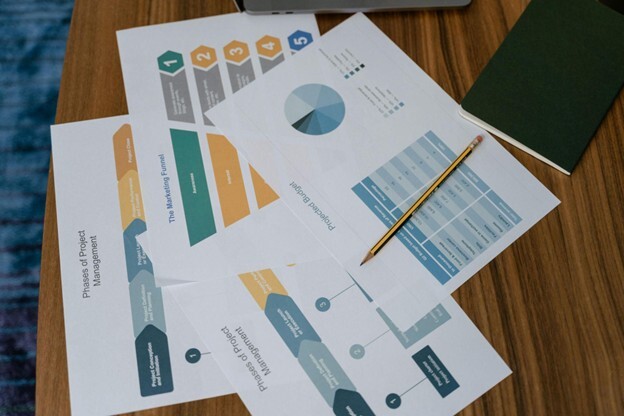
Source:https://www.pexels.com/photo/photo-of-papers-on-table-7605981/
Build Reporting Around Decisions, Not Data Volume
The fastest way to kill KPI noise is to stop starting with metrics. Start with decisions.
Ask three questions before a KPI earns a slot in a report:
- What decision does this metric support?
- Who owns that decision?
- What action changes if the metric moves?
This decision-first thinking mirrors a core business analysis principle: every requirement must trace back to a business objective. A KPI is simply a quantified requirement. If it cannot be tied to a decision or value outcome, it is noise, not insight.
This is also where levels of management reporting matter. A team lead needs operational levers they can pull today. A director needs trend lines that show whether a bet is working. A VP needs a short set of business outcomes with clear accountability. If you mix these audiences in one report, you get a long document that everyone skims and nobody trusts.
Here’s a clear pattern for tech companies:
- Team level: leading indicators tied to throughput and quality.
- Cross-team level: dependencies, capacity, and risk.
- Company level: outcomes that map to strategy and customer value.
When reporting is built around decisions, the next step becomes obvious: define what “good” looks like for each audience.
Make Every Report Answer the Same Core Questions
You can have beautiful dashboards and still deliver confusing updates. The fix is consistency.
Your management reports should answer a repeatable set of questions every time, even if the underlying numbers change. Here’s a simple structure that works across product, engineering, and operations:
- What changed? The smallest set of deltas that matter.
- Why did it change? One or two drivers, backed by data.
- So what? The impact on goals, customers, cost, or risk.
- Now what? A decision, an owner, and a timeframe.
A good report also has a “definition box” somewhere visible: metric definition, data source, refresh cadence, and known caveats. This prevents the classic argument where two teams debate the same KPI using different formulas.
One more practical move: cap the number of “hero KPIs” per audience. If a weekly report has 18headline metrics, it has zero headline metrics. Give people a short set they can remember without opening a dashboard.
If you standardize the questions your reports must answer, your readers stop hunting for meaning and start using the numbers.
Separate Daily Operations From Performance Storytelling
Most KPI noise comes from one mistake: using the same view for execution and evaluation.
Operational reporting is about keeping the machine running. It needs speed, granularity, and fast alerts. Think incident rate, on-call load, backlog age, build times, support queue time, deployment frequency, or feature adoption in the last 24 hours.
Performance storytelling is different. It is about trend, context, and prioritization. It can be weekly or monthly. It should include fewer metrics and more interpretation.
If you blend these, you end up with two bad outcomes:
- Ops metrics get buried and lose urgency.
- Strategy metrics get polluted by daily variance.
To avoid that, treat operations like a checklist, and strategy like a narrative. Some teams expect their dashboard to do both, like an online essay writing service that drafts conclusions on demand. Dashboards do not own judgment. Your reporting cadence and ownership model do:
- Daily ops view: real-time, exception-based, owned by operators.
- Weekly performance review: trends and drivers, owned by function leads.
- Monthly business review: outcomes and trade-offs, owned by executives.
Separate the “run” view from the “learn” view, and your KPIs will feel quieter immediately.

Source:https://www.pexels.com/photo/gray-laptop-on-the-table-7693224/
Translate Metrics Into Trade-Offs Leaders Can Choose
Executive reporting fails when it turns into a highlight reel or a metric dump. Executives need trade-offs.
A strong exec view does three things:
- Connects metrics to strategic goals (growth, retention, margin, risk).
- Shows the top constraints(capacity, quality, time-to-market, spend).
- Forces a decision or confirms one already made.
In tech companies, executives often get stuck between product, engineering, and go-to-market narratives. Your job is to provide a shared scoreboard. That means aligning a few cross-functional KPIs and defining them once.
Examples of exec-friendly metrics in a SaaS org:
- Net revenue retention (or churn, if you are at an earlier stage).
- Activation-to-retention conversion by cohort.
- Reliability and performance at the customer-impact level (not internal error counts).
- Unit economics signals, such as gross margin trend or cost per active user.
Also, include decision notes. If a KPI is moving the wrong way, state what you are changing. If it is stable, state what you will keep doing. Executives hate ambiguity more than bad news.
Design a Reporting System That Stays Efficient as You Scale
At some point, discipline beats hero effort. A scalable system has four components: a metric catalog, a governance loop, a cadence map, and a shared narrative template. The point is simple: metrics only matter when they reliably drive an operational choice, which is the same decision-first logic behind data analytics for operational decision-making.
Now add guardrails so KPI noise does not creep back in. Treat metric sprawl like scope creep: it starts small, then it eats your calendar.
Here are a few management reporting best practices that keep things sane:
- Define entry criteria for new KPIs: the decision it supports, the owner, the data source, and the refresh cadence.
- Retire KPIs on purpose: schedule a quarterly cleanup so old metrics do not linger “just in case.”
- Track data quality like a product feature: missing data, broken pipelines, and unclear definitions are bugs.
- Keep one source of truth per metric: many tools can display a KPI, but only one place should define it.
So, what makes good management reporting? It is boring in the best way. The same definitions. The same cadence. A small set of KPIs that map to decisions. Clear owners. Clear trade-offs. And a fast path from insight to action.
In Closing
KPI noise is rarely a tooling problem. It is a decision design problem. When reporting starts with decisions, separates operations from strategy, and translates numbers into trade-offs, people stop arguing about dashboards and start acting.
Use consistent report questions, match metrics to the right audience, and build a reporting system with owners, definitions, and a cadence that fits how your organization runs. If you keep the metric set small, review it on a schedule, and treat data quality as non-negotiable, your reports become a lever, just as it should be.

Leveraging Business Process Management and Six Sigma

How to Elicit 100% of the UI Requirements | Free Template


 Contact Us
No Comments Yet
Let us know what you think